


So, your first week on keto.
Well, if you're determined to switch to a ketogenic diet, there's only one step left for you: walk the talk.
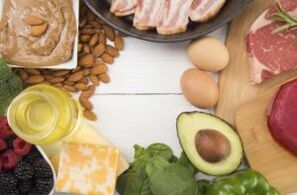
Great combo: fasting plus keto diet
There are two ways to achieve a state of ketosis:
- Fast.
- Eat in a way that maintains the state of ketosis (low carb).
Many people who have tried this combination will tell you:
Keto diet + intermittent fasting = great combination for losing weight.
This is how intermittent fasting works:
- Only eat at certain times of the day.The most popular scheme is to skip breakfast and eat only during the “window” from 12:00 to 20:00.
- From time to time, do a 24-hour fast: eat a full dinner and then don't consume a single calorie until the next dinner.Some people do this practically every day.You name itMFDD (one meal a day – “warrior diet”).
- Intermittent fasting affects men and women differently.And different people have different results.
When the body enters a state of starvation and no glucose sources are available for energy production, the liver begins to break down fat into ketones.Fasting can therefore trigger ketosis.Fasting for some time before starting the keto diet can accelerate the transition to the metabolic state of ketosis.Intermittent fasting during ketosis helps maintain this state.To put it simply, this combination looks like this: skip breakfast, do a fat-burning workout while fasting, and stick to the ketogenic menu from 12 p.m. to 8 p.m.
Why is the combination of intermittent fasting and keto diet effective?
Because it is quite difficult to stick to a ketogenic diet, especially in the beginning.Every time you eat something, there is a chance of doing something wrong and accidentally eating the wrong foods, causing you to break out of ketosis.Plus, we all tend to eat too much.So by cutting out a meal, you eliminate another chance of screwing something up.Why do you end up losing weight:
- You skip one of your meals.
- They almost completely eliminate one of the macronutrients - carbohydrates.
- In addition, there are other effects that also play a positive role.
But everything is individual.Therefore, you need to decide what is best for you.If you can't fast for a long time before starting the keto diet, then don't worry - you can start the keto diet without fasting first.Some people find success with one large meal per day, others follow the 16/8 intermittent fasting plan, and others eat several times a day.It all depends on the total amount of calories and carbohydrates you consume and how difficult it is for you to regulate them.
The keto diet should work for you, not the other way around!

How to avoid keto flu and other negative effects
Now here's the bad news: While ketosis is beneficial for the body in many ways, you may feel pretty bad at first.May occur: lethargy, absentmindedness, irritability, weakness.The time when the body enters ketosis is a pretty big shock to the entire system, especially if you previously consumed a lot of carbohydrates.Flu-like side effects may occur:
- muscle pain;
- Fatigue;
- Headache;
- digestive disorders;
- insomnia and others.
But ketosis is not the cause of this condition.The keto flu actually occurs when you avoid carbohydrates.The body can become overly dependent on them and have difficulty coping with the contraction.It takes time for the body to become keto-adapted.
Look at it this way: our body is a spoiled baby that has been safely fed candy and soda for the past few years.And suddenly they tell him: "There will be no more candy and soda. You will eat broccoli and chicken like a big boy."What will the reaction be?
Extremely negative: tantrums, mood swings, crying and indignation at the lack of sugar.
In the long run, this child will do much better with these changes, but it will take time.This carbohydrate “withdrawal” can be so dramatic for some people that it knocks them out for days and they eventually give up and give up, prematurely ending their love affair with the ketogenic diet.People are returning to tasty, carbohydrate-rich foods.It's not for nothing that Keto tops the list of the most difficult diets.The main reason is this: People give up quickly because they find it difficult to stick to the ketogenic diet long-term.
How do I deal with the keto flu?
Flu-like symptoms and headaches initially occur due to dehydration, fat adaptation, and electrolyte imbalances.When you cut carbohydrates from your diet, you also reduce your intake of certain minerals:
- Sodium.
- Magnesium.
- Potassium.
Therefore, you need to add them to your diet specifically.
How does it work?
As for sodium, you can simply add table salt to your food, but for potassium and magnesium you need to eat more kale and other vegetables, avocados and nuts.In any case, vitamin and mineral complexes can help.Many people have found that consuming plenty of fluids and minerals in the first few weeks makes the transition process much more bearable.

Starting a keto diet
Now let's discuss the step-by-step action plan:
- Take a photo, weigh yourself and measure your waist circumference.
These will be your basic indicators.The so-called “BEFORE” state.
Take front and profile photos.You don't have to look at them often or share them with anyone, but soon these photos will interest you.One hundred percent guarantee.
You can also write down your weight and any measurements you want (waist, hips, neck).
Write this information down and keep it private. - Calculate the calories and BJU you need (proteins, fats and carbohydrates).Although there is no need to count carbohydrates, by definition they should be less than 50 grams per day.You can carry out all further calculations yourself using a calculator.
Record your results:Calories, carbohydrates, fats and proteins. - Go keto food shopping.Check out their list and choose the ones you like that require less effort.Keep keto snacks and desserts on hand in case I have enough and burn everything to hell.
- Remember that you will be deficient in sodium, potassium and calcium for the first few days and weeks.Supplementing with these minerals helps a lot at the beginning of the keto diet when you are in the keto flu phase.You can also ask your pharmacy for test strips to measure ketones in urine.This way you can ensure that you are actually in the state of ketosis.This also helps keep you motivated.
- Do you often eat out and love fast food?Most restaurants and food establishments post information about their dishes online.Check everything: dishes, spices and sauces.If you're not sure, don't eat.Another nuance.Many people find it difficult to tolerate without bread in their diet - it contains too many carbohydrates.This problem can be solved: you can prepare keto bread at home based on almond and coconut flour.
- Tell someone.The biggest challenge with the keto diet is simply sticking to it consistently.You can talk to a loved one or friend and invite them to your support team.Or send them this article and encourage them to try keto with you.This way they don't get discouraged, you have someone to report to!
- Try starting the week with a short fast.This is a psychological and physiological test.Consider skipping breakfast tomorrow - you'll have one less meal to prepare, consume fewer carbs, and reach ketosis quickly!
- Focus on big achievements throughout the week.Allow yourself to mope a little –The keto flu is realGiving up carbs is difficult and your body will hate you at first:
Drink plenty of water and consume electrolytes - potassium, calcium and sodium - if you get a headache.Add more salt to your meals and focus on eating more leafy greens (kale, broccoli, spinach) to restore electrolyte balance.
Rely on your support group.Talk to those who have already been in this situation, ask questions, share your feelings!
Eat keto salads and snacks when things get tough.It's better to eat a few snacks and overindulge in calories than to make yourself miserable and give up altogether.
Keep track of every meal, every dish - this is very important in the first week as you have to absorb a lot of information about different foods.
Do what you can - maybe you miss a meal or realize you accidentally ate carbs.
It's not the end of the world!
Forgive yourself, learn your lesson, and return to the keto diet at your next meal. - Continue or adapt.Depending on your body, your environment, your previous eating habits, and your physiology, this first week will be both“By the way, it’s not that bad!”or“What a disgusting thing this ketogenic diet is!”
Either way, you will learn something.Most Desired Result: Persist the entire 30 days and see how your body reacts as it exits the keto flu stage. - At the end of the month, take another photo, measure your waist circumference, weigh yourself and compare these to your original “BEFORE” measurements.
Are you feeling better?
Does it look better?
Did you enjoy the process?
If the answer is, “Yes, everything is fine.”— Continue the ketogenic diet.
What if the answer was, “No, that’s disgusting.”- Well then!You have found a method that does not suit you.Even a negative result is a result.

Is it possible to exercise while on a keto diet?
What to do if you not only want to lose weight, but also look good at the same time?Let's look at what happens to our bodies during cardio or strength training.You may not be able to do much in the first few weeks.As experts say:
Physical performance is significantly reduced after one week of a ketogenic diet.However, performance is restored after about 6 weeks, but sometimes it can take longer.
There is still no final verdict on this matter.Depending on your activity level, reducing your carbohydrate intake can have a big impact on your performance.But there are many completely opposite results.
Strength training
If you don't eat carbohydrates, muscle glycogen reserves will dry up very quickly during strength training.
Will the training itself suffer?
Good question.Quite possible.
Does eating a keto protocol change the body's reliance on glycogen stores during resistance training?Do you need less glycogen or are reserves replenished in other ways?
Very possible.Nobody knows 100%;This issue is still being investigated.Many studies have found that the keto diet not only does not reduce performance, but also has a positive effect on strength training.
Now one more thing: This is not an ironclad rule and your results may vary.There are a number of studies that show that you can do strength training or CrossFit while on a keto diet and not lose muscle mass.Other studies show the opposite.What does it mean...
Everything is individual – no two snowflakes are the same.Make sure your trial period is long enough so that you are past the keto flu phase and the decline phase.Then you will get an exact answer about what effect keto has on you.
Plus, unless you're a professional athlete, this probably isn't that big of a deal!If someone reaches a low enough body fat percentage, it will have a negative impact on athletic performance.But it doesn't stop people from achieving the ideal contours of their stomach and waist!
Endurance training
Is keto good for runners and cyclists?They traditionally consume large amounts of carbohydrates.
Maybe not.
Our body cannot store more than 1600-2000 calories of glucose (glycogen), but the body can store more than 40,000 calories of fat.So what happens if, instead of constantly consuming gels and snacks to keep your glucose levels high, you switch to a keto-adapted diet and start eating fat?
What does science say about this?:
Previous experiments suggested that a low-carb diet improves endurance by increasing muscle glycogen concentrations.However, more recent research seems to lean more towards keto.
The ketogenic diet has been tested on ultramarathon runners and triathletes and in all cases, ketosis resulted in improved body composition and some of the highest fat burning rates ever recorded!
A 2016 study examined 20 ultramarathon runners andTriathletes,Half of them followed a fat-adapted diet for six months and the remaining 10 followed a traditional carbohydrate-oriented diet.
Results:
- The load was the same in both groups - 3 hours of running.
- In the keto group, the fat oxidation rate was 2.3 times higher than in the carbohydrate group, at an average of 1.5 grams per minute.
- There were no significant differences in glycogen concentration before or after the study.
Just like strength training, this can work for you.Or maybe you're in a better position with a carbohydrate diet.After a few months of following a ketogenic diet, you will understand and be able to decide what suits you best.
Unless you're an elite professional athlete, this shouldn't be a problem - stick to a diet that helps you look and feel good, and then build your workout around the previous day's results!
What if you just want to look better?
80% of success in losing weight depends on a change in diet.And exercise helps improve your health and build a body you can look at in the mirror with pride.
So pay attention to your training, watch your diet, and work on getting a little better - run a second faster, do one more rep, lift another 2-4 pounds, etc. Compare yourself to your former self.
Researchers often focus on short-term ketosis (a few days or weeks).This can lead to negative results for athletes who are not yet fully accustomed to the ketogenic diet.The benefits of keto can vary depending on your physiology.
So who cares if you lift 2-3 kilos less!If keto works for you and you look and feel much better, then just keep going and don't change anything.
To try the keto diet combined with strength training, follow these guidelines:
- Give your body 2-4 weeks to adjust to ketosis.
- Make sure your body gets enough minerals and water.
- Eat enough protein to help your muscles recover quickly.
- See how your body reacts - change the load as needed.
And the ketogenic diet will work for you!However, it is possible that this is not the case!
Well, and the most important thing:
Stay healthy